








Noise optimized cooling
Technical infos

Noise optimized active cooling is becoming increasingly significant
The specified noise level of a fan, like its expected service life, requires further explanation. Noise is measured under standardized conditions in an acoustic test chamber. For this purpose, the fan is suspended on rubber cords, and the noise level is measured at a defined distance from the fan hub on the air intake side. The relevant standard is ISO 7779, which specifies a measuring distance of 1 metre. However, small fans generate so little noise that it is preferable to take the measurement at a distance of 0.1 metres and then reduce the measured value by 20 dB.
The results provide useful guidance, but they do not represent the actual noise generated when the fan is installed in a specific application. Important factors such as the mounting method, housing design, housing material, back pressure and unfavourable airflow conditions are not taken into account during the measurement. However, these factors can have a significant effect on the fan noise in the respective application. Selecting the right fan and installing it correctly depends on several factors and should therefore always be carried out in consultation with our experienced fan specialists.
Measures required to reduce noise
Measures required to reduce noise depend on the actual application and as far as design is concerned, should already be taken during the development phase. As subsequent changes are usually expensive and less effective, the following points should be observed:
Elastic fan sleeves
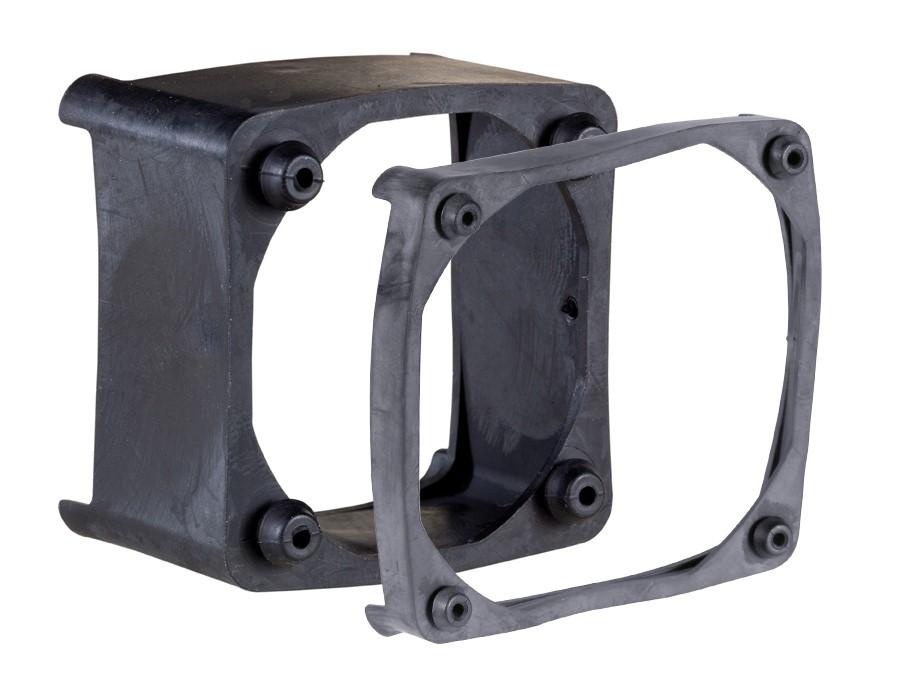
Use adequately dimensioned mounting aids for reducing structure-borne noise, e.g.
collars. The fastening devices for elastic securing LM or SLM are available for fan sizes of 30 mm x 30 mm to 120 mm x 120 mm. They enable the quick installation on mounting plates or housings so that the noise can be reduced by up to 9dB.
The values are intended as a general guide only and do not represent the actual noise level when the fan is installed in the respective application. Important factors such as the mounting method, enclosure design, enclosure material, back pressure and unfavourable airflow conditions are not taken into account during the measurement. However, these factors can have a significant impact on the fan noise generated in the specific application.
Mounting that reduces noise
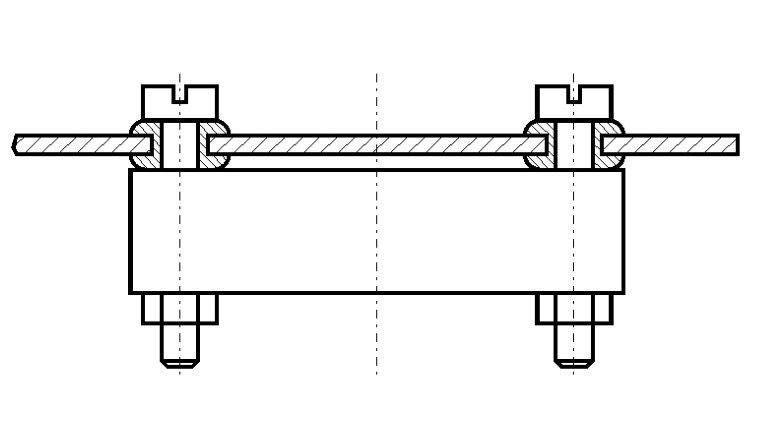
Simple and affordable mounting that reduces noise can be achieved by using cable bushings and not mounting the fixing screws directly on the housing wall:
Reducing speed
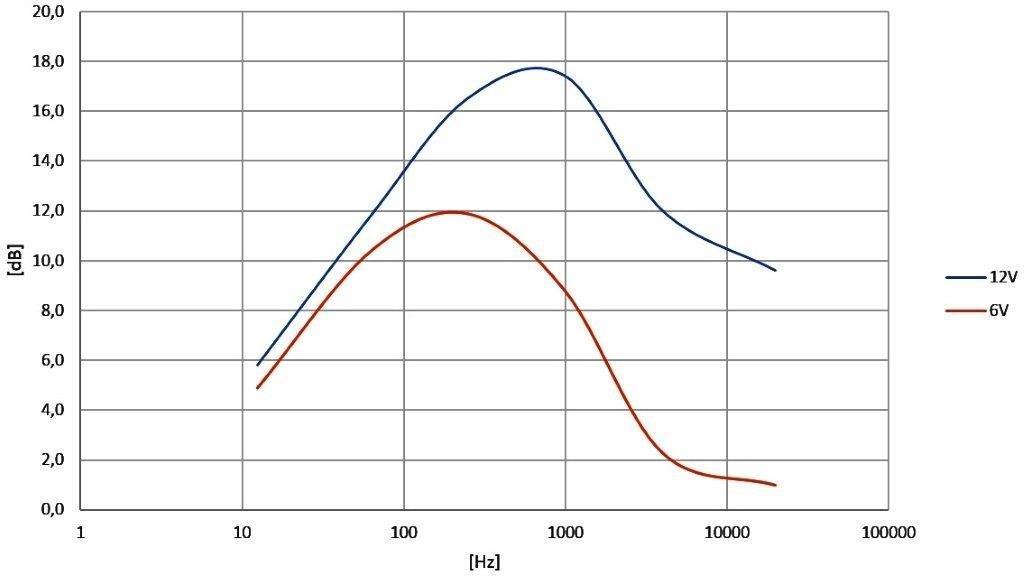
- Choose fans with the largest possible dimensions and the lowest speed that is necessary for cooling. Two fans with the same flow rate can develop up to 12dB less noise than one single fan with a higher speed! Unpleasant, „sharp“ high-frequency sound ranges are
reduced more than low and medium frequencies. - Use PWM (pulse-width modulation) to control the fan. A fan is loudest when it is spinning at high speed. The higher the speed, the greater the air turbulence and the more noise it produces. PWM allows the electronics to adjust the fan speed precisely to the actual cooling requirements. When the system is cool, the fan runs quietly at a low speed. As the temperature rises, it only speeds up as much as necessary. This means that, most of the time, it operates significantly more quietly than a fan that always runs at full power.
Optimum operating range
Ensure that you operate the fans in the optimum operating range and the intake and discharge ports in the device are generously dimensioned as outside the operating range (too high pressure) the emitted airborne noise rises sharply.
Correct positioning
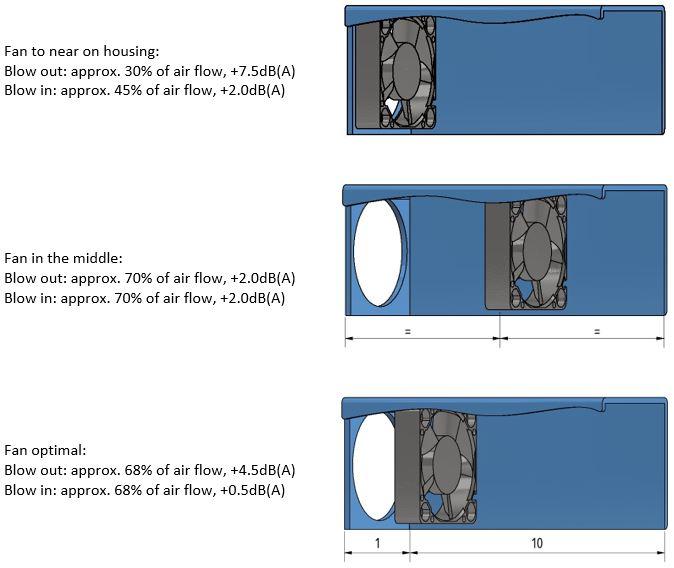
The emitted noise also depends on the fan’s position and airflow direction. Please refer to the following illustration:
Advantage sleeve bearing
Choose sleeve bearing fans with extremely low speed as they develop less structure-borne sound than fans with ball bearings. The MagFix® technology of SEPA EUROPE reliably prevents the disadvantages of the older versions of sleeve bearing fans and can be operated in every installation position. Axial and radial fans by SEPA EUROPE with modern blade shape develop considerably less noise with the same flow rate.
